Cooperate with African women solving climate change, not middle men exploiting it
We are the only cooperative selling durable carbon removal and aiming to return 95% of profits back to the communities.






What you get
Proof, not Ponzi!
Let’s face it - the carbon market lacks trust! So, we show proof of everything. Each month you get a certificate of what has been removed. The data will be shared with the scientific community to have more eyes checking to ensure this is not a Ponzi scheme!
See transparency platform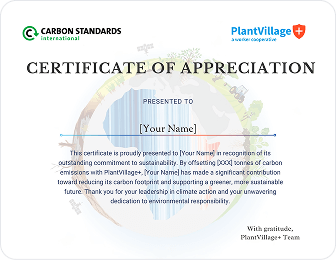
Support farming communities
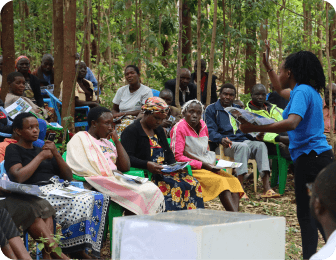
You support the rural youth, women-led cooperatives, and farming families who turn agricultural waste into lasting climate impact.
1000+ years durability
The best carbon removal is durable removal (>1,000 years) and the most widely sold durable removal method is biochar.
Major buyers like Google and Microsoft have expert teams who evaluate what is the best value and greatest impact. They are buying hundreds of thousands of tonnes of biochar based credits.

Personal hand-drawn artwork
On the 3rd month of subscription you’ll get a unique artwork from White House recognized artist, Abhijeet Shrivastava that is made with the carbon you pay to remove.

Make a step
Subscribe to offset your footprint
Why offset, not avoid?
Some emissions are simply unavoidable
While reducing emissions is crucial, some emissions from daily activities, travel, business operations, and production are simply unavoidable.
Learn about our approachBut you can mitigate the consequences
Every carbon credit you buy means that the amount of CO2 was captured from the air, transformed into biochar, and permanently locked in the soil.
Transparency platform
Every gram is tracked and every impact meaningful. You will always be able to see how much you removed!
All data shared publicly with the global community of scientists along with a data cube from PlantVillage that includes data from NASA, ESA, NOAA and others to study the effects of biochar on plant growth. Each survey is verified through a combination of AI analysis and manual review to ensure accuracy and prevent fraud.
With every offset certificate you’ll receive links to surveys proving your offset.
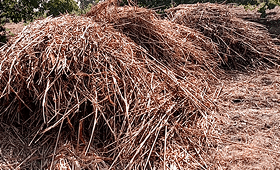
Biomass used
Waste biomass is collected and properly dried to make the process efficient and to prevent emissions.
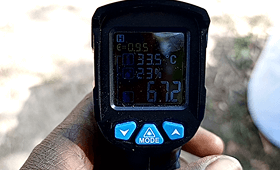
Production process
We control every aspect of production — including burn temperature, which is a key factor in quality and efficiency.
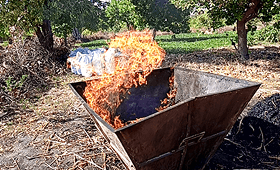
Furnace and other equipment
Production equipment also plays an important role in the effectiveness of the process.
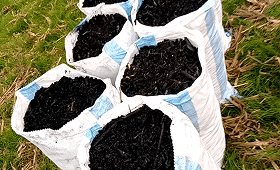
Production result
Biochar locks CO₂ for 100+ years. After production, we bag the biochar to measure the exact amount and use it as a fertilizer.
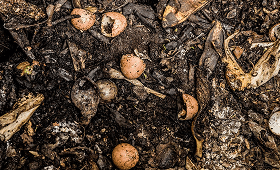
Input fertilisers
Some of the biochar is blended with fertilizers to enrich the soil even further.
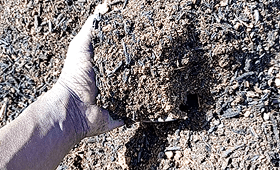
Biochar mixing with fertilisers
Once biochar is mixed with fertilizers, it can only be used in soil — effectively locking the carbon.
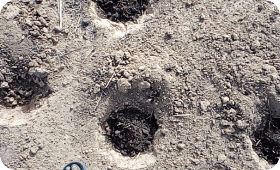
Spreading biochar across farms
Pure biochar and biochar-based fertilizers are then applied to the soil.
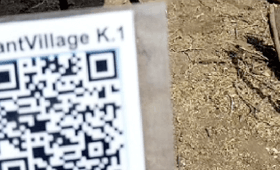
Tagging each bag of biochar and fertiliser with QR code
Using our code, we track every step from production to soil application, ensuring the entire lifecycle of the biochar is recorded.

Lock CO2 into soil
Subscribe to offset your footprint

David Hughes
A Founder with a purpose
David was an internationally renowned scientist working on fungi that control ant behavior- the famous Zombie Ant system. Besides his pure science which won international prizes and the usual accolades, his work inspired video games and TV shows like the Last of Us, books and movies like World War Z on which he was a consultant. He was having a wonderful time and especially so since he was kicked out of school at 15 so being able to live his dream of being rainforest scientist was amazing!
But, he gave up his life’s work and passion to focus on climate change. That is his contribution to solving climate change. What will your contribution be?
Learn about our approachFAQ
What are carbon credits and how do they work?
A carbon credit represents one metric tonne of CO₂ (or equivalent greenhouse gas) that has been reduced, avoided, or removed from the atmosphere. These credits are generated by certified projects that lower emissions or store carbon. Once verified, credits can be bought, sold, or retired by companies and individuals to offset their own emissions or meet sustainability goals.
What is biochar and how does it make carbon credits?
Biochar is a special kind of charcoal made by heating things like crop waste or sticks in a low-oxygen oven. Instead of releasing smoke and greenhouse gases, the carbon in those plants gets trapped inside the biochar. When it’s mixed into soil, it doesn’t just stop new emissions — it also acts like a carbon sponge, pulling carbon dioxide out of the atmosphere and locking it away for hundreds of years. Because biochar both avoids emissions and stores carbon safely in the ground, it earns carbon credits that can be sold to companies or individuals. Beyond removing carbon from the atmosphere, biochar helps restore the nutrient content of degraded soils — especially important in Africa, where soils are older than the dinosaurs! It also helps the soil retain water, making it more resilient to drought, and boosts crop yields for farmers, creating healthier, more productive farms.
Why buy carbon credits / What are the benefits?
Beyond cutting emissions, your purchase helps fund social and environmental co-benefits in the communities doing the hard work of protecting nature. Much of this work happens in the Global South, where environmental protection is often unpaid or under-funded. By buying high-quality carbon credits, you help compensate and empower vulnerable communities who are building a more sustainable future for everyone. In Bill Gates’ recent report, he cites data from University of Chicago’s Climate Impact Lab showing that when you account for the economic growth of low-income countries, projected deaths from climate change fall by more than 50%. Economic growth saves lives - so by buying carbon credits from farmers, you’re helping them earn a living that protects them from becoming another climate change fatality.
Offset your footprint
You’ll get a personalized certificate and a unique tracking link, so you can see your direct impact.
All plans deliver the same permanent climate benefit
- 1000-year CO2 lock
- Personalized certificate
- Support smallholder farmers
for subscribers
Best for offsetting additional one-time impact
Offset emissions from daily activities, travel, business operations
If you need integrations and legal tracking